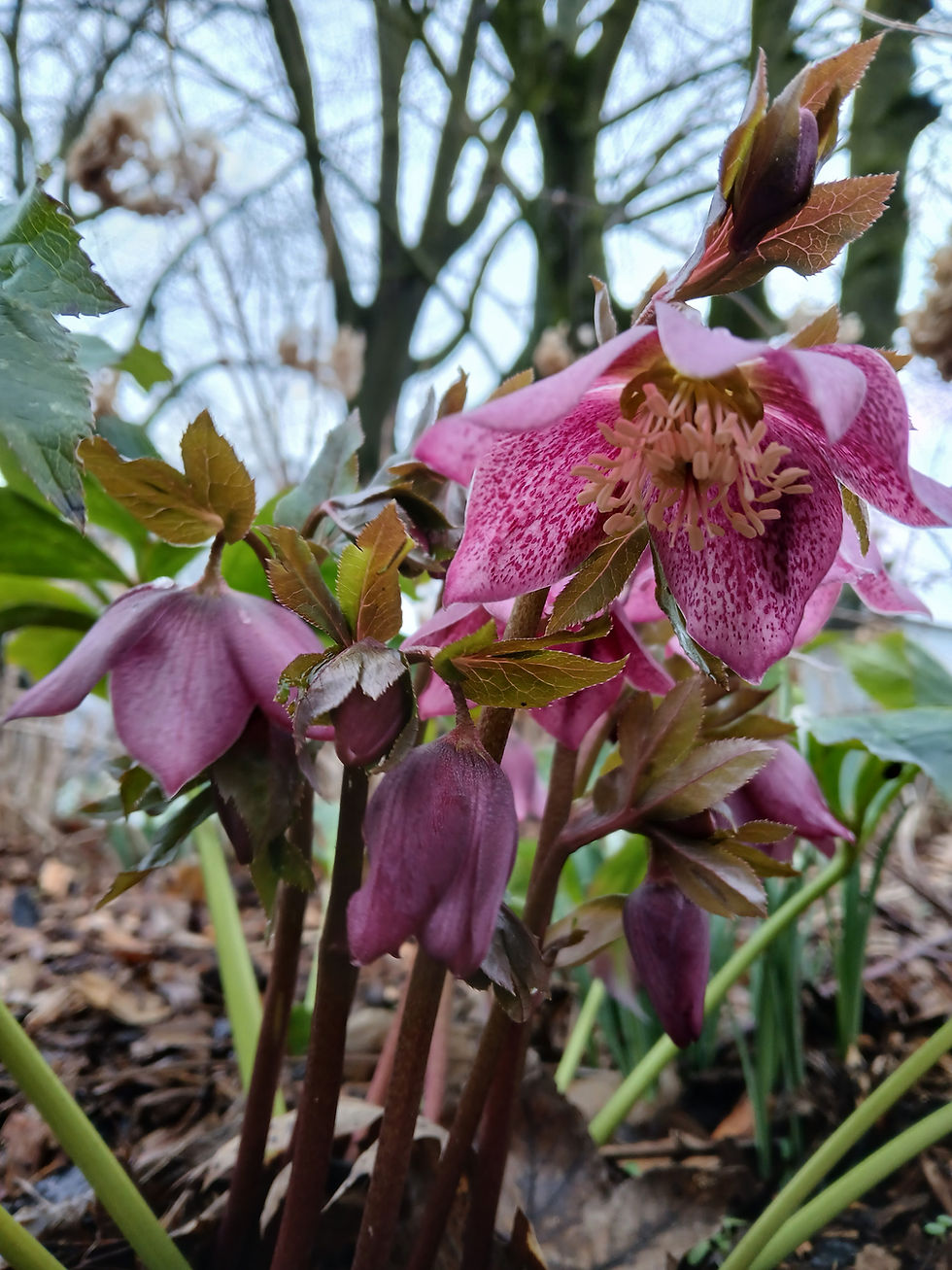
Hurray for Lungwort
- The Reverie
- 2 mrt
- 1 minuten om te lezen
Bijgewerkt op: 16 mrt
There is a particular moment in early spring when lungwort quietly takes centre stage.
While many plants are still hesitating, Pulmonaria is already in full bloom. Low to the ground, its flowers open in shifting shades of pink, violet and blue, even changing colour as they mature. The effect is subtle from a distance, intricate up close.
Beyond its beauty, lungwort is one of the earliest nectar sources available to pollinators. Bumblebees in particular seem to know exactly where to find it. On mild spring days, the flowers hum with activity while much of the garden is still waking up.

The foliage remains long after the flowers fade. Silver-spotted or softly mottled leaves form a dense, ground-hugging layer that suppresses weeds and protects the soil. In semi-shade, especially under shrubs and deciduous trees, lungwort proves reliable year after year.
It asks for little: moisture-retentive soil, partial shade and minimal disturbance. In return, it provides colour when colour is scarce and structure when the rest of the border still feels bare.

Lungwort rarely stands alone. Around it, early crocuses push through the soil, small woodland violets weave between stems, and hellebores nod quietly in the filtered light. Before shrubs leaf out and perennials gather momentum, these spring companions
provide continuous nectar and early shelter at a time when little else is available, supporting the season’s first pollinators.